
Understanding the specialized vocabulary of urban art is essential for any content professional, marketer, or publisher aiming for accuracy and authority. Without precise terminology, discussions around graffiti, street art, and public installations risk misrepresentation, alienating knowledgeable audiences, and undermining content credibility. This glossary provides a foundational lexicon, enabling clearer communication and more effective content strategies within the urban art sphere.
Defining the Urban Art Landscape
The umbrella term "urban art" encompasses a diverse range of artistic practices that occur in public spaces, often without official permission. It's a dynamic field with its own history, subcultures, and specific terminology that distinguishes various forms and techniques.
Graffiti Terminology: The Foundation
Graffiti, originating from the Italian word "graffiato" meaning "scratched," refers to writing or drawings scribbled, scratched, or sprayed illicitly on a wall or other surface in a public place. Its evolution has produced a rich, distinct vocabulary.
- Tag: An artist's stylized signature, typically executed quickly and often the most basic form of graffiti. It serves as a primary identifier and territorial marker.
- Throw-up: A more elaborate tag, usually consisting of bubble-style letters or simple block letters, often filled in quickly with one color and outlined in another. It's designed for speed and visibility.
- Piece (Masterpiece): A complex, multi-colored graffiti artwork, often incorporating intricate lettering, characters, and backgrounds. Pieces require significant time and skill, representing an artist's advanced capability.
- Wildstyle: A highly complex and often abstract form of graffiti lettering, where letters are intertwined, interwoven, and difficult for outsiders to read. It emphasizes artistic skill and often serves as a challenge within the graffiti community.
- Bombing: The act of covering a large area with multiple tags and throw-ups, often done rapidly and in high-visibility locations to maximize exposure.
- Crew: A group of graffiti artists who often paint together, share resources, and represent their collective identity through their work. Crews typically have a shared name or tag.
- Writer: An individual who creates graffiti. This term is preferred within the graffiti community over "graffiti artist."
- Buff: The act of removing or painting over graffiti by authorities or property owners. Understanding this term is crucial for content discussing the ephemeral nature of graffiti.
- Blackbook: A sketchbook or notebook used by graffiti writers to practice lettering, develop designs, and collect signatures or sketches from other writers. It functions as a portfolio and social artifact.
- Can: Slang for a spray paint can, the primary tool for most graffiti and street art.
- Cap: The interchangeable nozzle on a spray paint can, which determines the spray width and pattern. Different caps ("fat caps," "skinny caps") produce distinct lines and fills.
Street Art Terminology: Expanding Beyond Letters
Street art generally refers to art created in public spaces, often with an artistic intent beyond simple tagging, and frequently employs a wider range of techniques and materials than traditional graffiti.
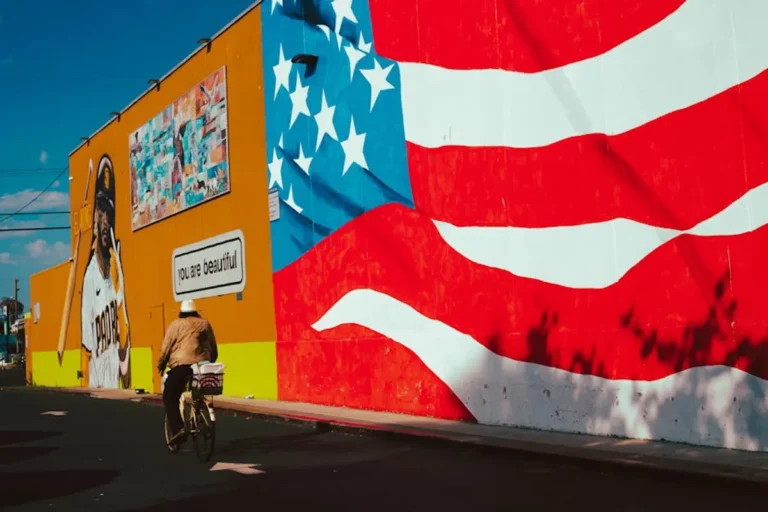
- Mural: A large-scale painting applied directly to a wall or ceiling. Murals can be commissioned or unsanctioned, often depicting narrative scenes, portraits, or abstract designs.
- Stencil: A technique where an image or design is cut out of a material (like cardboard or plastic) and then paint is applied through the cut-out areas to transfer the image onto a surface. Stenciling allows for rapid reproduction and precise imagery.
- Wheatpasting: A method of affixing paper posters or prints to walls using a mixture of flour and water (wheatpaste). This technique allows artists to create detailed works in a studio and then quickly install them publicly.
- Sticker Art (Slap Art): Small, pre-made artworks (often vinyl stickers or hand-drawn labels) that are quickly applied to public surfaces. They are a low-risk, high-volume way for artists to disseminate their work and often include tags or characters.
- Installation: A three-dimensional artwork created or arranged in a specific public location, often interacting with the surrounding environment. Urban art installations can be temporary or permanent.
- Yarn Bombing (Knit Graffiti): A form of street art where knitted or crocheted fabric is used to cover objects in public spaces, such as lampposts, statues, or trees. It's often seen as a softer, non-destructive form of urban intervention.
- Street Artist: An individual who creates street art. This term broadly covers artists using various techniques beyond traditional graffiti.
Context, Culture, and Commercial Applications
The urban art world operates within a complex interplay of legal, social, and commercial considerations. Understanding these terms helps contextualize the art form for broader audiences.
- Public Art: Art that exists in public spaces, often commissioned by institutions or governments, and intended for public viewing. While some street art becomes public art through official recognition, the terms are not interchangeable.
- Commission: An agreement where an artist is paid to create a specific artwork, often for a public space, private collection, or commercial entity. This marks a shift from unsanctioned work to legitimate commercial engagement.
- Gallery Show: An exhibition of urban art in a formal gallery setting. This represents the art form's transition from the streets to established art institutions, often involving canvas works or prints inspired by street practices.
- Vandalism vs. Art Debate: The ongoing discussion regarding the legal and aesthetic status of unsanctioned urban art. For content creators, acknowledging this dichotomy is crucial for balanced perspectives.
Pro Tip: When discussing urban art, especially graffiti, always consider the legal context. Unsanctioned work is often illegal and carries consequences for the artists. Content that glosses over this aspect or inadvertently glorifies illegal acts can misinform audiences and potentially lead to ethical issues for publishers.
Leveraging Urban Art Terminology for Content Strategy
For SEO professionals, marketers, and content creators, a precise understanding of urban art terminology offers several advantages:
- Targeted Keyword Research: Differentiating between "graffiti artist" and "street artist" allows for more granular keyword targeting, appealing to specific audience segments interested in distinct forms of urban art.
- Enhanced Content Authority: Using the correct terms demonstrates expertise, building trust with an informed audience and distinguishing content from generic overviews.
- Improved User Experience: Accurate language helps users find exactly what they're looking for, reducing bounce rates and increasing engagement.
- Ethical Content Creation: Understanding the nuances, such as the "vandalism vs. art" debate or the legal implications of certain practices, enables the creation of balanced, responsible content.
- Commercial Opportunities: Identifying terms like "mural commission" or "gallery show" helps pinpoint commercial avenues for artists, brands, or cultural institutions.
Navigating the Urban Art Lexicon
Mastering the vocabulary of urban art is more than an academic exercise; it's a strategic imperative for anyone operating in content, marketing, or cultural analysis. This lexicon equips professionals to produce more accurate, engaging, and commercially relevant content, fostering deeper connections with both the art form and its diverse audience.
Frequently Asked Questions
What is the primary difference between graffiti and street art?
Graffiti typically refers to text-based, stylized writing, often focused on names or tags, with deep roots in hip-hop culture and an emphasis on territorial marking. Street art encompasses a broader range of visual art forms like murals, stencils, and installations, often with more explicit artistic or social messaging, and may appeal to a wider audience.
Is all urban art illegal?
No. While much traditional graffiti and some street art is unsanctioned and therefore illegal, a significant portion of urban art today is commissioned. Public murals, sanctioned street art festivals, and gallery exhibitions are all legitimate forms of urban art that operate within legal frameworks.
Why is it important for marketers to understand urban art terms?
Marketers benefit from understanding these terms to create authentic, targeted campaigns. Precise language avoids misrepresentation, helps identify specific subcultures or audience segments, and enables effective collaboration with artists or cultural institutions for brand activations, content creation, or community engagement.
How does urban art terminology evolve?
Urban art terminology evolves organically from within its subcultures, reflecting new techniques, movements, and social contexts. New terms emerge as artists innovate, and existing terms may gain new meanings or fall out of common use, underscoring the dynamic nature of the art form.