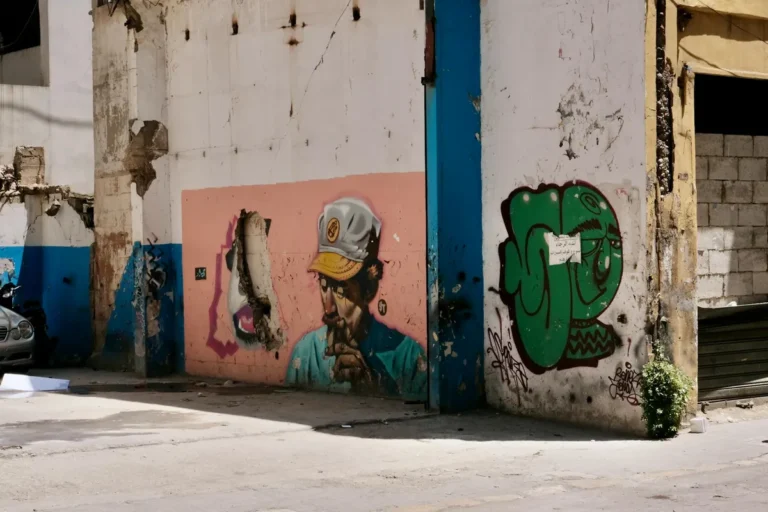
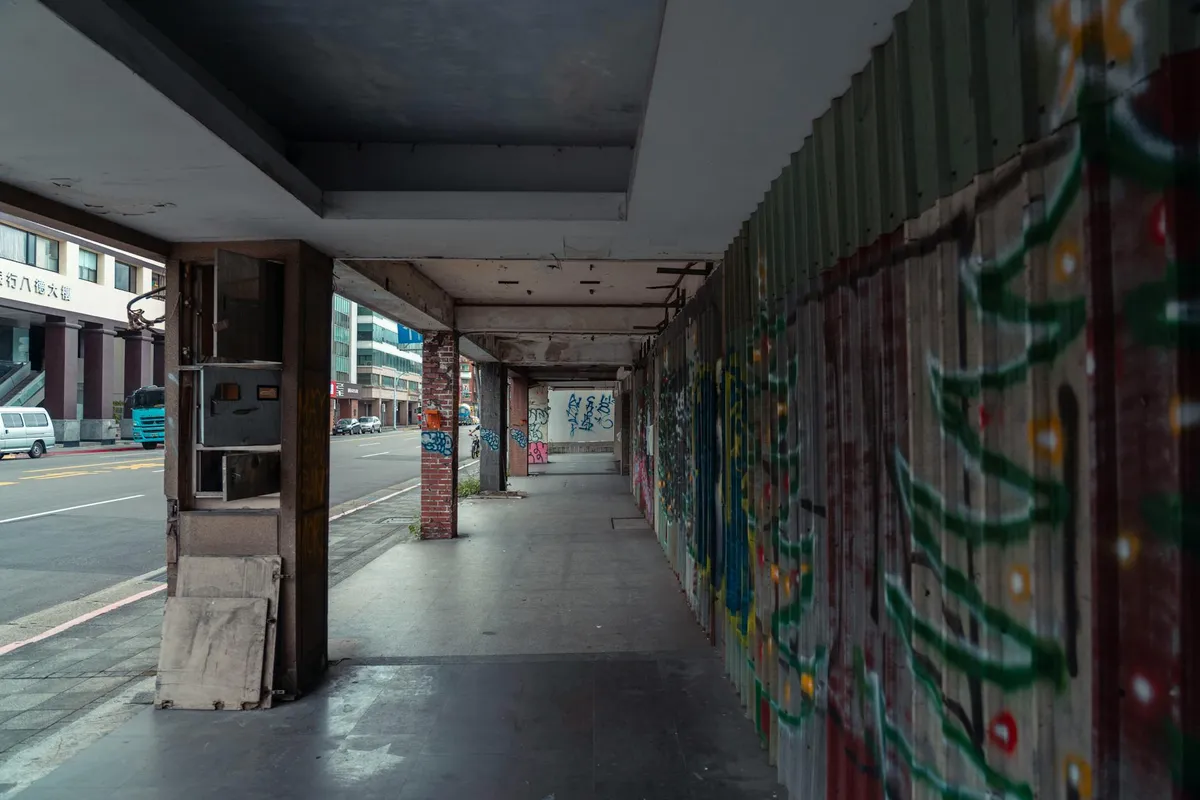
Street art exists in a permanent argument about ownership. The property owner owns the building. The city regulates the public space the wall faces. The artist who paints on the wall claims something — call it authorship, even when the painting is anonymous. The community that lives with the work claims something different — call it cultural belonging, the work as part of the neighborhood's identity. None of these claims is trivial; none of them resolves the others.
This essay is about the layers of ownership the wall participates in and what each implies for how we think about the art that appears on them.
Legal ownership: the property owner
The legal claim is the simplest. The property owner has the legal right to determine what appears on the building they own, including the exterior walls. This claim is recognized by every legal system in every jurisdiction. Painting on someone else's wall without permission is, in the legal sense, vandalism — regardless of the artistic quality of the painting.
This legal claim is real and consequential. Property owners can and do remove unauthorized paintings. Legal systems can and do prosecute artists for unauthorized work. The stark version of property rights — "it's my wall and I decide what's on it" — has the law on its side.
The complication is that the legal claim doesn't exhaust what ownership of a wall involves. The owner owns the building; the wall faces the public street; the painting on it becomes part of what every passerby experiences. The owner's legal authority over the wall produces effects on people who have no legal relationship to the building at all.
Public-space regulation: the city
Cities regulate what can appear in public space, including on private buildings whose facades are visible from the street. Sign ordinances. Color restrictions in historic districts. Permit requirements for large-scale work. Anti-graffiti enforcement priorities. The city's claim is regulatory rather than ownership-based, but it constrains what either property owners or artists can do with walls.
This regulatory claim varies dramatically across cities. Some cities have aggressive anti-graffiti enforcement; others have explicit programs supporting authorized murals; still others have inconsistent enforcement that produces de facto tolerance for some work and prosecution of other work that is legally identical.
The regulatory claim is itself a political question. Who decides what's permitted? Through what process? With what input from the communities affected? These questions are less-discussed than the property-rights questions but are equally consequential for what walls actually look like.
Authorship: the artist
The artist who paints on a wall claims something that's harder to name precisely. Not legal ownership, certainly. Not property rights. But authorship in some sense — the work was made by someone, the someone made specific choices that produced the work's specific character, and there's a meaningful sense in which the work is theirs even when they have no legal claim to the surface.
Authorship claims become visible when the work is modified. A property owner who paints over half a mural and leaves the other half intact has done something different from a property owner who removes the mural entirely. The partial modification disrespects the artist's authorship in ways that complete removal doesn't. The artist's claim, even without legal recognition, has cultural force that produces this distinction.
The clearest cases of authorship claims appear when authorized murals are subsequently modified or removed without the artist's consent. The legal property rights of the owner permit the modification. The authorship claim of the artist is violated by it. Both claims are real; they conflict; the resolution typically favors the legal claim but produces resentment that reflects the legitimacy of the artistic claim.
Community: the people who live with the work
The fourth layer is the community that lives with the work. The neighborhood that walks past the wall every day. The residents whose street-level experience is shaped by what appears on the wall. The locals who come to associate the wall's painting with the place itself.
This community claim is the least legally recognized but, in some ways, the most consequential. A piece of street art that becomes loved by its neighborhood acquires a kind of cultural ownership that the property owner cannot easily override without producing community resistance. The work has, through its presence and the community's relationship to it, become part of the place — and the place belongs, in some sense, to the people who live in it.
The clearest examples are murals that have become identified with specific neighborhoods over years. Removing them produces grief and resistance from residents who have come to think of the work as theirs. Property owners who attempt to remove beloved murals frequently encounter community pushback that no legal claim alone can address.
This community ownership is real even though it's legally weak. It explains why certain street art persists for decades while other equally-good work is removed within weeks; the community attachment, when it develops, becomes a force that affects what the property owner can do without significant social cost.
The conflict among the claims
The four layers of claim regularly conflict. The artist claims authorship; the property owner claims removal rights; the community claims attachment; the city claims regulation. Each is partially valid; none is completely sufficient.
The conflicts are usually resolved in favor of legal property rights. The owner removes the painting; the city tickets the artist; the community grieves and moves on. This resolution is consistent with how legal systems work but produces outcomes that many observers find unsatisfying.
Alternative resolutions are possible. Some cities have developed policies that recognize community attachment to certain works and create review processes before authorized removal. Some property owners voluntarily preserve community-loved work even when they have the legal right to remove it. Some artists negotiate explicit agreements with property owners that recognize all four layers of claim.
These alternatives are still rare. The default remains legal property rights overriding the other claims. But the alternatives demonstrate that the simple property-rights resolution is a choice, not a necessity.
The gentrification dimension
The conflicts among ownership claims become especially acute in the context of gentrification. A neighborhood with a developed street-art tradition becomes attractive; property values rise; new property owners arrive who have no relationship to the existing community or to the existing work; the existing work is removed or modified by the new owners; the community that built the tradition is displaced by the same forces that valued the tradition's aesthetic effects.
This pattern has played out in neighborhoods in many cities — the Mission in San Francisco, Wynwood in Miami, Williamsburg in Brooklyn, Berlin Friedrichshain, and many others. The street art that helped produce the cultural identity that attracted gentrification has often been removed by the gentrification it helped produce.
The pattern reveals something important about ownership. The legal property rights of new owners override the cultural ownership of the prior community. The aesthetic identity that the prior community produced becomes a marketing asset for new development that displaces them. The conflict among ownership claims is, in this context, also a conflict about whose city it is.
What this analysis is for
The point of separating these layers is not to resolve them in some abstract way. Each claim has legitimacy; the conflicts among them are not artifacts of bad theorizing but real tensions inherent to the form.
The point is to make visible what the standard discourse usually obscures. When street art is discussed simply as either "vandalism" or "art," both framings collapse the multiple claims into a single binary that doesn't do justice to what's actually at stake. Property owners arguing for removal cite their legal rights; artists arguing for preservation cite their authorship; communities arguing for protection cite their attachment; cities arguing for regulation cite public interest. All four are arguing about real things; none is reducible to the others.
Engaging with street art seriously requires holding these tensions rather than resolving them prematurely. The work that appears on walls participates in a permanent argument about ownership of public-facing surfaces. The argument doesn't end. It continues with each new piece, each removal, each modification, each gentrification cycle.
The closing observation
The wall's ownership is contested in ways the legal system imperfectly captures. The artist, the property owner, the city, and the community all have real claims; the resolution among them shapes what walls actually look like and what street art actually is.
This is not a problem to be solved. It is the condition under which street art exists. The ongoing argument is, in many ways, what gives the form its political and cultural weight. A street art tradition that resolved the ownership argument would, in the resolving, become a different form — probably a duller one.
The contestation is part of what makes the work interesting. The walls keep talking partly because the question of who owns them keeps being asked.