
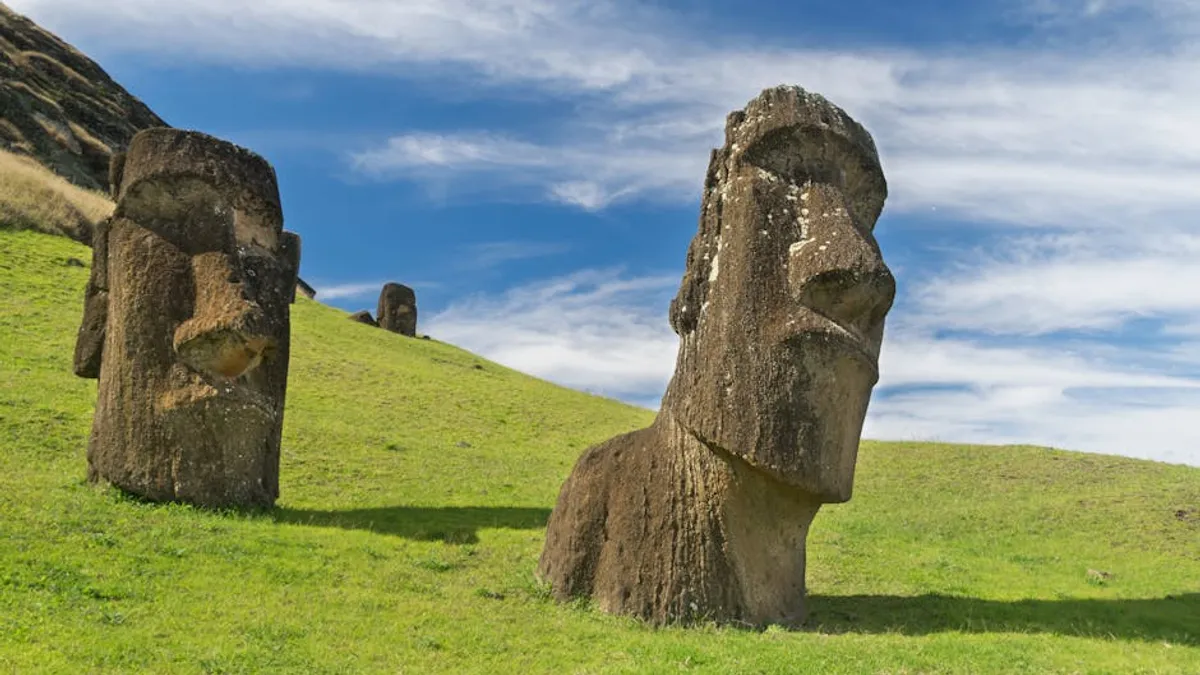
The Moai statues of Rapa Nui represent one of humanity's most compelling archaeological enigmas, their stoic visages carved from volcanic rock standing sentinel across a remote Pacific island. For anyone engaging with cultural heritage, art history, or the broader narrative of human ingenuity and societal collapse, a precise understanding of the Moai's meaning, stylistic nuances, and historical context is essential. These monolithic figures are not merely ancient sculptures; they are profound cultural markers, embodying a complex interplay of spiritual belief, engineering prowess, and environmental adaptation that offers critical insights into past civilizations.
Meaning and Purpose of the Moai
The primary function of the Moai was to embody the spirits of deified ancestors (aringa ora), serving as guardians and protectors of the Rapa Nui people. Erected on ceremonial platforms known as ahu, typically along the coastline, their gaze was directed inland, watching over their descendants and villages. This orientation suggests a protective spiritual role, channeling ancestral mana (spiritual power) to ensure the fertility of the land, abundant harvests, and the well-being of the community.
Each Moai was a direct link to the lineage and prestige of a particular clan. Their construction was an act of veneration, a monumental effort that demonstrated the power, wealth, and organizational capacity of the chieftain responsible. The larger the statue, the greater the mana and status it conveyed, both for the ancestor it represented and the living chief who commissioned it. This competitive display of monument building likely contributed to the escalation in size and number of Moai over centuries.
Distinctive Style and Construction
The iconic style of the Moai is immediately recognizable, characterized by exaggerated features and a formidable presence. Nearly all were carved from the soft, easily workable tuff (compressed volcanic ash) found in the Rano Raraku quarry, which served as the island's primary sculpture factory. The carving process involved specialized stone tools, with teams of carvers working directly into the rock face.
Key stylistic elements include:
- Elongated Faces: High foreheads, deep-set eye sockets, and prominent, often aquiline, noses.
- Strong Brows: Providing a sense of gravitas and authority.
- Thin Lips: Often carved in a slight pout or downward curve, conveying a solemn expression.
- Long Ears: Extending down the sides of the head.
- Arms and Hands: Typically carved in bas-relief, with hands resting on the abdomen, fingers often touching the navel, symbolizing fertility and lineage.
- Pukao: Later Moai often featured cylindrical "topknots" or hats, carved from red scoria from the Puna Pau quarry. These represented hair bundles, a sign of high status among Polynesian chiefs.
- Eye Inlays: While most statues originally had blank eye sockets, some were fitted with white coral and black obsidian or red scoria pupils, believed to be inserted only when the Moai was ritually activated on its ahu, imbuing it with life and mana.
The sheer scale of these sculptures is remarkable, with many standing over 13 feet tall and weighing tens of tons. The largest, "Paro," stands at nearly 33 feet and weighs 82 tons. The quarry itself contains hundreds of unfinished Moai, offering a unique archaeological record of the carving techniques and abandonment of the practice.
Pro Tip: When analyzing visual representations of Moai, pay close attention to the presence or absence of pukao and eye inlays. These details often indicate the statue's completion status, its intended placement, and its period of creation, offering deeper insights into Rapa Nui's cultural evolution.
Historical Context and Evolution
The creation of the Moai spanned approximately from 1000 AD to 1600 AD. Early Moai were smaller and less refined, gradually evolving into the massive, stylized figures seen today. This period represents the flourishing of Rapa Nui society, characterized by complex social structures, agricultural development, and a sophisticated religious system centered on ancestor veneration.
The transportation of these colossal statues from the Rano Raraku quarry to their coastal ahu remains a subject of intense debate and archaeological experimentation. Theories range from "walking" the statues upright using ropes and rocking motions, to rolling them on log rollers. Each theory highlights the immense logistical and engineering challenges faced by the islanders, especially given their limited resources.
By the 17th and 18th centuries, the Moai carving ceased, and a period known as the "Huri Moai" (Moai toppling) began. Tribal warfare, resource depletion, and possibly a shift in religious beliefs led to the systematic toppling of the statues, often face down, breaking their connection to the ancestors and symbolically disabling their protective power. European contact in the 18th century found most Moai already fallen, contributing to the island's enigmatic reputation.
Visual Guide: Key Features and Variations
A visual assessment of Moai reveals not only their shared characteristics but also subtle variations that speak to different periods, carvers, and intended purposes. While the general form is consistent, individual Moai possess distinct "personalities" due to variations in facial proportions, earlobe length, and the treatment of the hands.
When observing Moai:
- Quarry vs. Ahu Moai: Statues still in the Rano Raraku quarry often show the full body, sometimes buried up to their necks, revealing torsos with detailed backs, loincloths, and even petroglyphs. Those on ahu platforms are typically only visible from the waist up, with their base buried.
- Back Carvings: Some Moai feature intricate carvings on their backs, such as rings and "M" shapes, whose meanings are still debated but may relate to clan symbols or spiritual markings.
- Ahu Construction: The platforms themselves varied in size and complexity, often incorporating older Moai fragments or stones from previous structures, indicating a continuous tradition of sacred space.
- Material Differences: While most are tuff, a few Moai were carved from basalt or trachyte, harder stones that resulted in more compact, less detailed figures.
Understanding these visual cues allows for a more nuanced interpretation of the Moai, moving beyond their monolithic appearance to appreciate the intricate cultural context they represent.
Preserving and Interpreting Moai for Future Generations
The enduring presence of the Moai statues continues to challenge contemporary understanding, offering invaluable lessons in cultural resilience, the impact of environmental factors on society, and the power of human belief. For professionals in cultural preservation, education, or travel, appreciating the Moai involves recognizing their vulnerability to erosion, seismic activity, and human impact. Conservation efforts, often involving international collaboration, focus on stabilizing the statues, protecting their ahu, and managing tourism responsibly to prevent further degradation.
Interpreting the Moai today means engaging with the descendants of their creators, the Rapa Nui people, whose oral traditions and contemporary perspectives provide crucial context often missing from archaeological records. Their narrative offers a living connection to the statues, enriching our understanding beyond purely academic or historical viewpoints. The Moai stand not just as relics of the past, but as living monuments to a culture's ingenuity and its ongoing story.
Frequently Asked Questions About Moai Statues
What does "Moai" mean?
"Moai" is the Rapa Nui word for "statue." It specifically refers to the monolithic human figures carved by the Rapa Nui people on Easter Island (Rapa Nui).
How many Moai statues are there on Easter Island?
There are approximately 887 known Moai statues on Easter Island. This number includes those standing on ahu, those in transit, and the many unfinished statues still in the Rano Raraku quarry.
How were the Moai transported and erected?
The exact methods of transportation and erection are still debated. Popular theories suggest the statues were "walked" upright using ropes and rocking motions, or moved horizontally on log rollers, then raised onto their ahu using ramps and levers.
Why were the Moai toppled?
The toppling of the Moai, known as "Huri Moai," occurred primarily between the 17th and 18th centuries due to internal tribal conflicts, resource scarcity, and a possible shift in religious beliefs. Toppling an enemy clan's Moai was a way to symbolically destroy their mana and ancestral power.